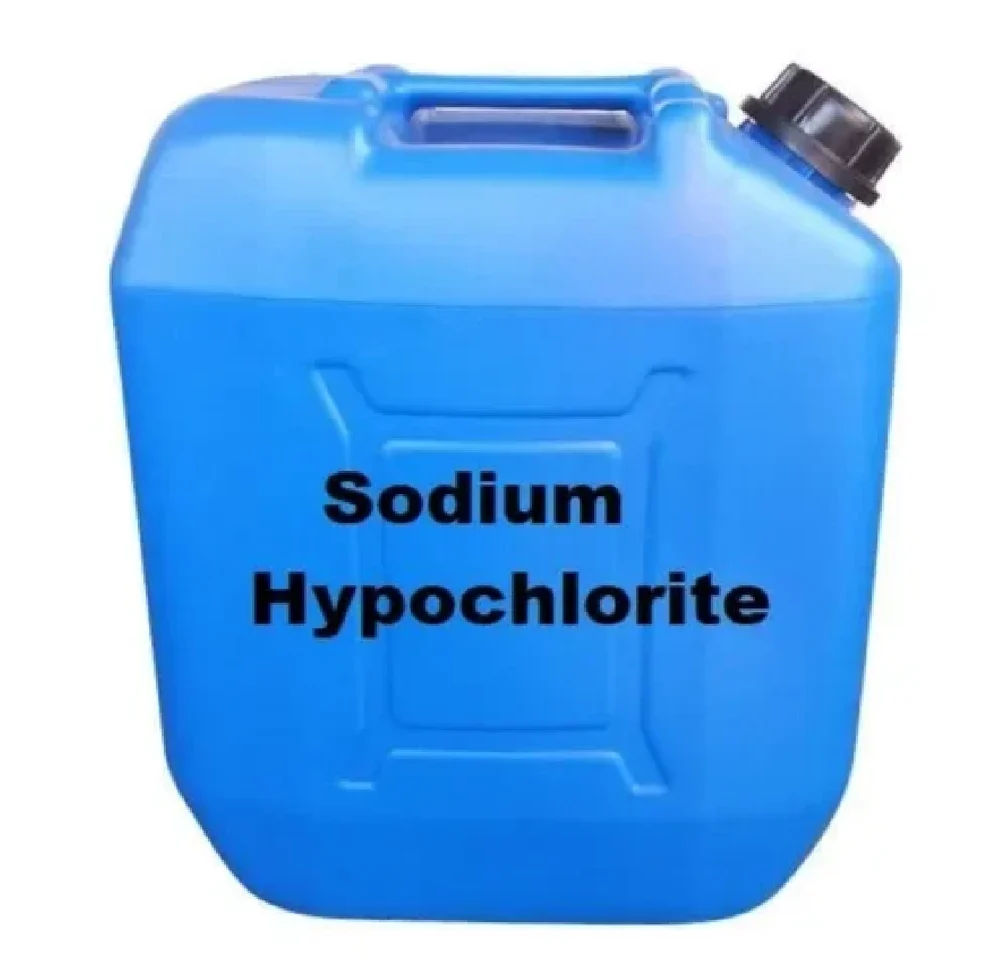
Sodium hypochlorite (NaOCl) is a chemical compound widely used as a liquid bleach, disinfectant, and oxidizing agent. It is a pale greenish-yellow liquid solution, with a strong chlorine odor, containing approximately 3–8% active chlorine for household use, and upwards of 12-15% for industrial or pool applications. Acting as a strong disinfectant, it breaks down essential bacterial and viral proteins through oxidation. While effective in water treatment, textile bleaching, and sanitation, it is highly reactive, unstable over time, and can decompose to produce oxygen and chlorine gas.
Sodium hypochlorite, commonly referred to as bleach, is a chemical compound with the formula NaOCl. Sodium hypochlorite solutions are made by reacting chlorine (gas or liquid) with a dilute sodium hydroxide solution in continuous or batch method. These two reactants are the major co-products from most chlor-alkali cell rooms. It is commonly available in strengths of 3 to 20 wt. % sodium hypochlorite and is shipped in a variety of methods such as rail tank car, cargo tank (truck), and other smaller containers.